
Spring is when renovation plans turn into action.
As soon as the weather starts to improve, homeowners begin calling contractors, pulling designs back out, and trying to get projects started. This is also when one of the biggest renovation problems shows up — permits being rushed, misunderstood, or skipped entirely.
Permits aren’t exciting, but they matter. And getting them wrong can delay a project, add unexpected costs, or stop work altogether.
Why Permits Matter More Than Most People Realize

Permits exist to protect homeowners, not to make renovations harder.
They ensure that work is:
- done safely
- built to code
- inspected properly
- documented for future resale
When permits are skipped or rushed, the risk shifts entirely onto the homeowner. If something goes wrong later, insurance issues, resale problems, and legal complications can follow.
That’s not a position you want to be in.
Spring Is Permit Season in Kelowna
Spring is the busiest time of year for permit offices.
Applications increase. Review times get longer. And projects that weren’t planned early often get stuck waiting. This is why homeowners who plan ahead have a smoother experience, while others feel rushed and frustrated.
If you’re thinking about renovating this year, permits should already be part of the conversation — not something dealt with once construction is supposed to start.
Common Permit Mistakes We See
Over the years, we’ve seen the same issues come up repeatedly:
- assuming a permit isn’t required
- relying on verbal advice instead of written confirmation
- working with contractors who downplay permits
- starting work before approvals are in place
- not understanding that different scopes require different permits
In Kelowna, rules can vary depending on:
- the type of renovation
- whether it’s structural
- electrical or plumbing changes
- secondary suites
- commercial versus residential work
There is no one-size-fits-all answer.
A Good Contractor Doesn’t Avoid the Permit Conversation
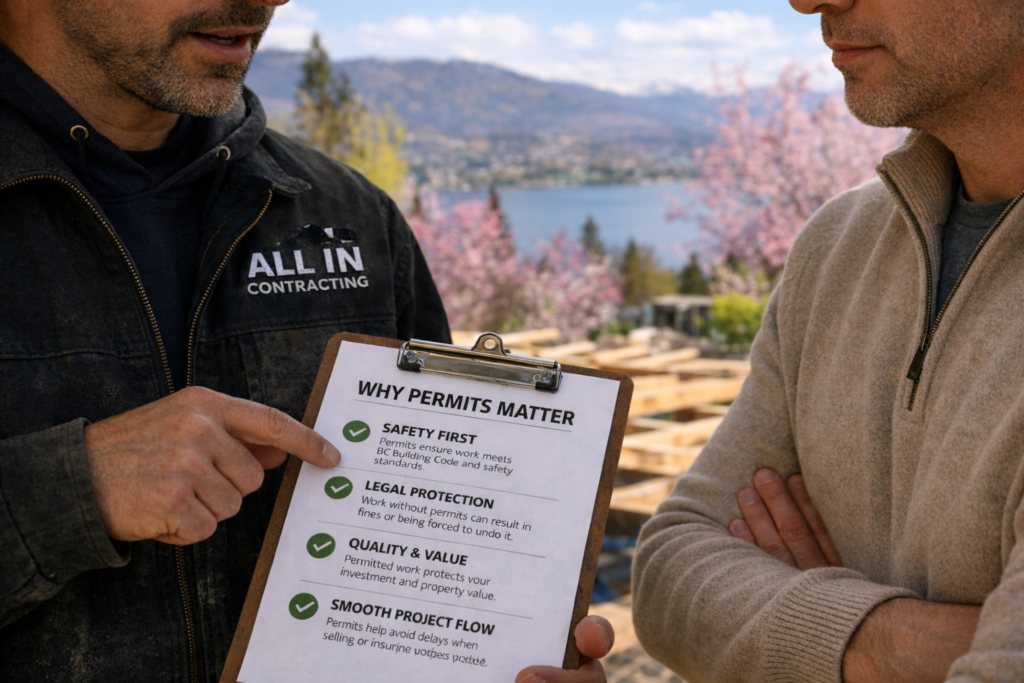
One of the clearest signs of a professional contractor is how they handle permits.
A good contractor will:
- explain which permits are required and why
- factor permit timelines into the schedule
- coordinate inspections
- work with the local building department
- document approvals properly
If a contractor tries to avoid permits or tells you they “aren’t necessary,” that’s a red flag. Shortcuts at the permit stage usually lead to bigger problems later.
Call the Building Department — They Will Help
This surprises a lot of homeowners, but local building departments are actually a great resource.
If you’re unsure whether your project requires a permit, call them. Ask questions. Get clarity. It’s better to spend time up front than to deal with enforcement issues later.
Cutting corners rarely saves money in the long run.
Permits Are Part of Planning, Not an Obstacle
Permits shouldn’t be viewed as an inconvenience. They’re part of doing the job properly.
When permits are handled early and correctly:
- timelines are more predictable
- inspections go smoothly
- projects stay compliant
- homeowners are protected
This is especially important in spring, when schedules are tight and mistakes are harder to recover from.
Plan Early, Build with Confidence

If you’re planning a renovation this year, spring is the right time to make sure permits and regulations are understood before work begins.
The right contractor will help guide this process, explain what’s required, and make sure everything is done properly — not rushed.
Doing it right the first time is always the easier path.
